The resilience paradox
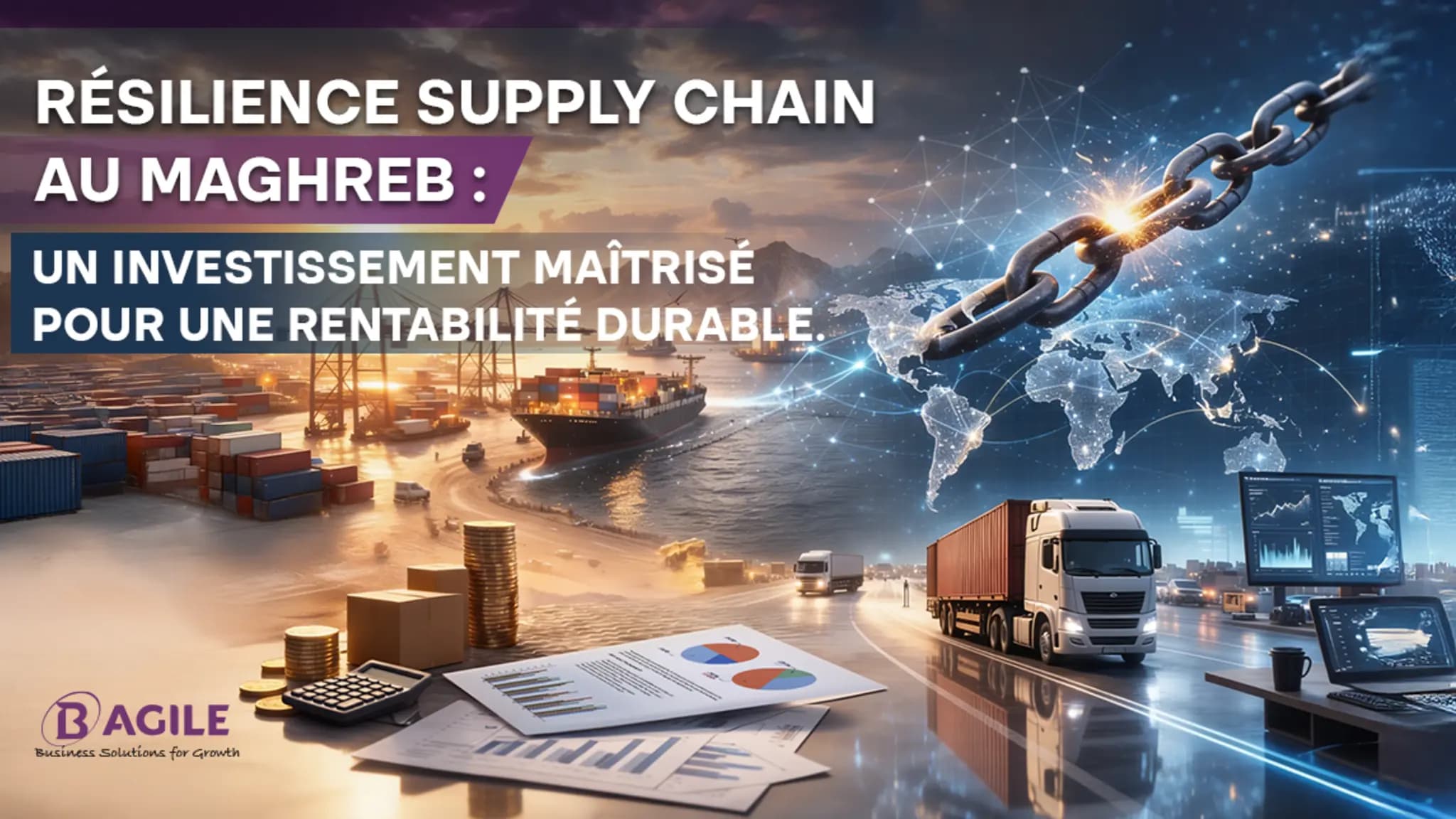
Maintaining fallback capacity, targeted inventory, alternative suppliers and continuity plans has a visible cost. The useful question is how that cost compares with the cost of the disruptions actually feared, over an explicitly defined scope and period.
A resilience decision cannot therefore be justified by a generic percentage: it must connect the disruption scenario, exposure, recovery time, cost of protection and expected service level.
Resilience is not free. It is profitable.
A critical analysis of the McKinsey 2026 study and its implications for North African companies:
What McKinsey does not explicitly say
The study identifies three pillars of resilience: visibility, integration and simulation. In our field experience, however, it underestimates a fourth decisive factor: the quality of foundational data.
Real-time visibility into incorrect data makes the problem worse. A TMS connected to an outdated ERP merely propagates poor decisions more quickly.
Resilience depends on reliability. Reliability is architected.
The true cost of the architecture
For an industrial SME, investing in resilient infrastructure is significant, but remains lower than the cost of a single major production disruption or the loss of a strategic customer.
What North African companies underestimate
Import dependency and the concentration of some flows through few gateways can make an organisation vulnerable beyond its own walls.
Seasonality can create peaks far above normal activity. Without simulation capability, each season increases operational pressure.
Fragmented tools force teams to consolidate data and increase the risk of error. The scale must be measured in each organisation.
Our view: three levels of maturity
Level 1: Survive. Real-time visibility into inventory and orders. Responsiveness, not anticipation.
Level 2: Anticipate. ERP-WMS-TMS integration, scenario simulation and automatic alerts.
Level 3: Optimise. Predictive CMMS, digital twins and AI demand forecasting.
Most North African companies are still at level 0. Those that reach level 2 gain a lasting competitive advantage before level 3 becomes the norm.
The question to ask
It is not, "Are we investing in resilience?"
It is, "What level of maturity do we want to have reached when our competitors reach level 2?"
B-AGILE supports companies as they increase their maturity, from the initial audit to deployment of the integrated EMS suite.