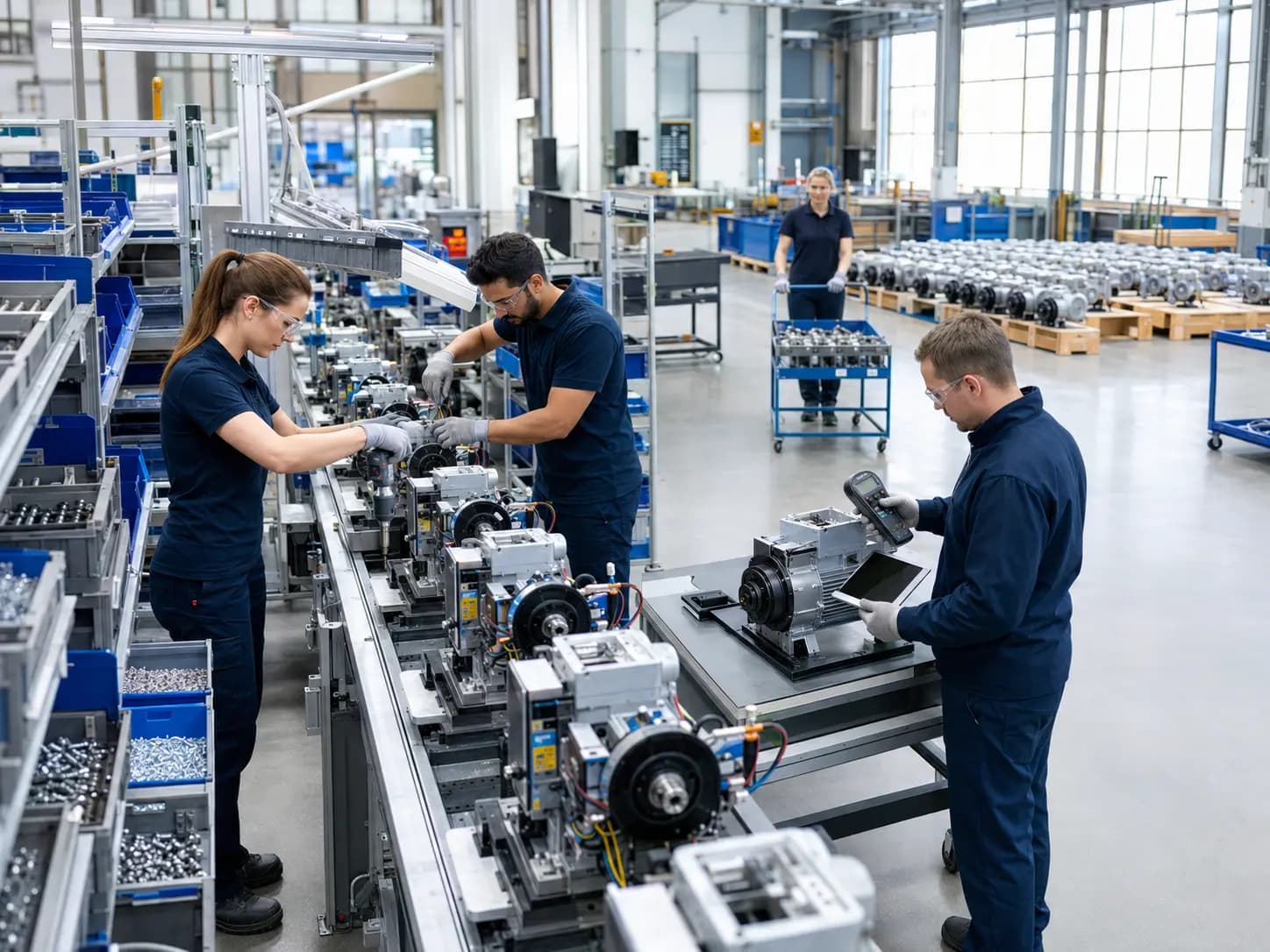
Disconnected plan and shop floor
Priorities change without the schedule, materials and teams sharing the same view.

Industrial planning
Turn demand, capacity, materials, assets and priorities into an executable schedule understood by the teams responsible for delivery.
Your daily industrial challenges
Priorities change without the schedule, materials and teams sharing the same view.
Theoretical load masks waiting, changeovers and capacity that is actually available.
Reservations, consumption, scrap and output are consolidated too late.
Criticality, condition, preventive work, spares and schedule are not connected early enough.
Checks, non-conformances, causes and releases follow separate timelines.
Materials, time, energy, subcontracting and downtime do not reach the order at the right time.
An end-to-end operational view
EMS Industry solutions
Deploy the complete core or build a phased roadmap without replacing applications that already fulfil their role.


Master data, demand, supply, orders, consumption, output and economic view.
Explore the solution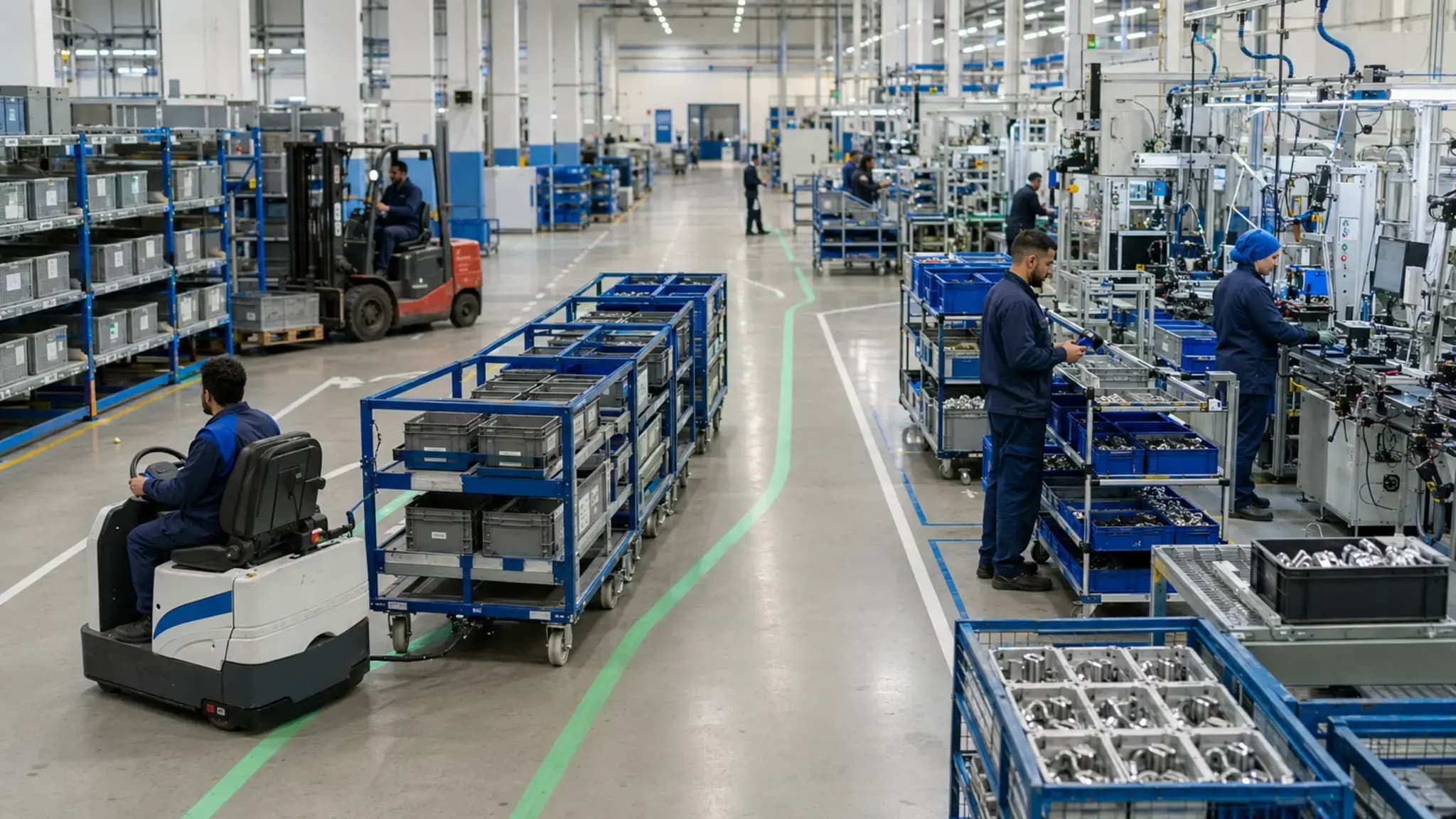

Receiving, locations, batches, line supply, movements, counts and finished goods.
Explore the solution

Technical assets, criticality, preventive and corrective work, work orders, spares and history.
Explore the solution

Transport demand, panel, allocation, tracking, evidence, service control and cost.
Explore the solution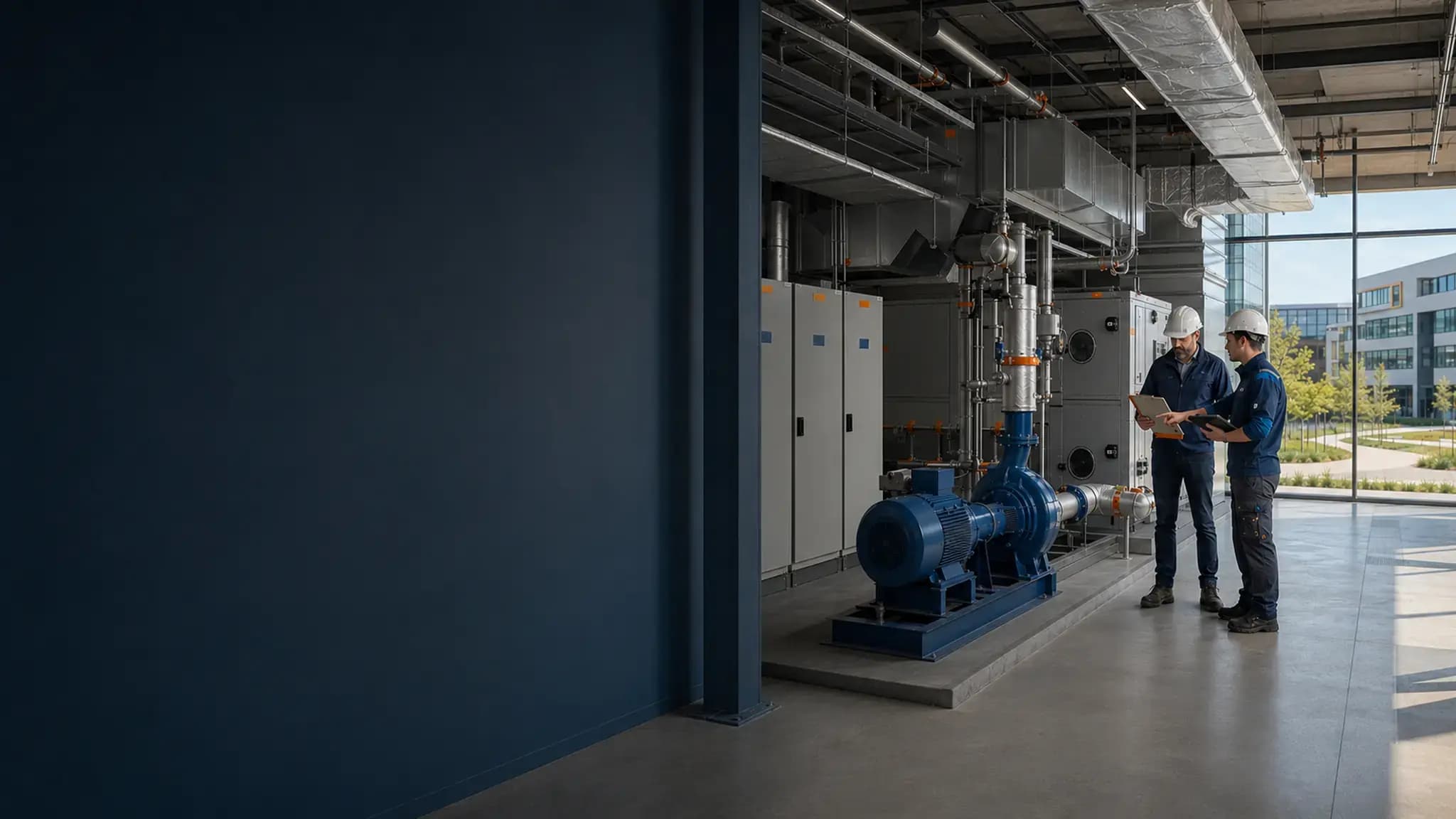
Buildings, utilities, shared assets, requests, interventions and related contracts.
Explore the solution

Accounts, opportunities, commitments, visits and continuity between commercial promise and execution.
Explore the solutionKey capabilities
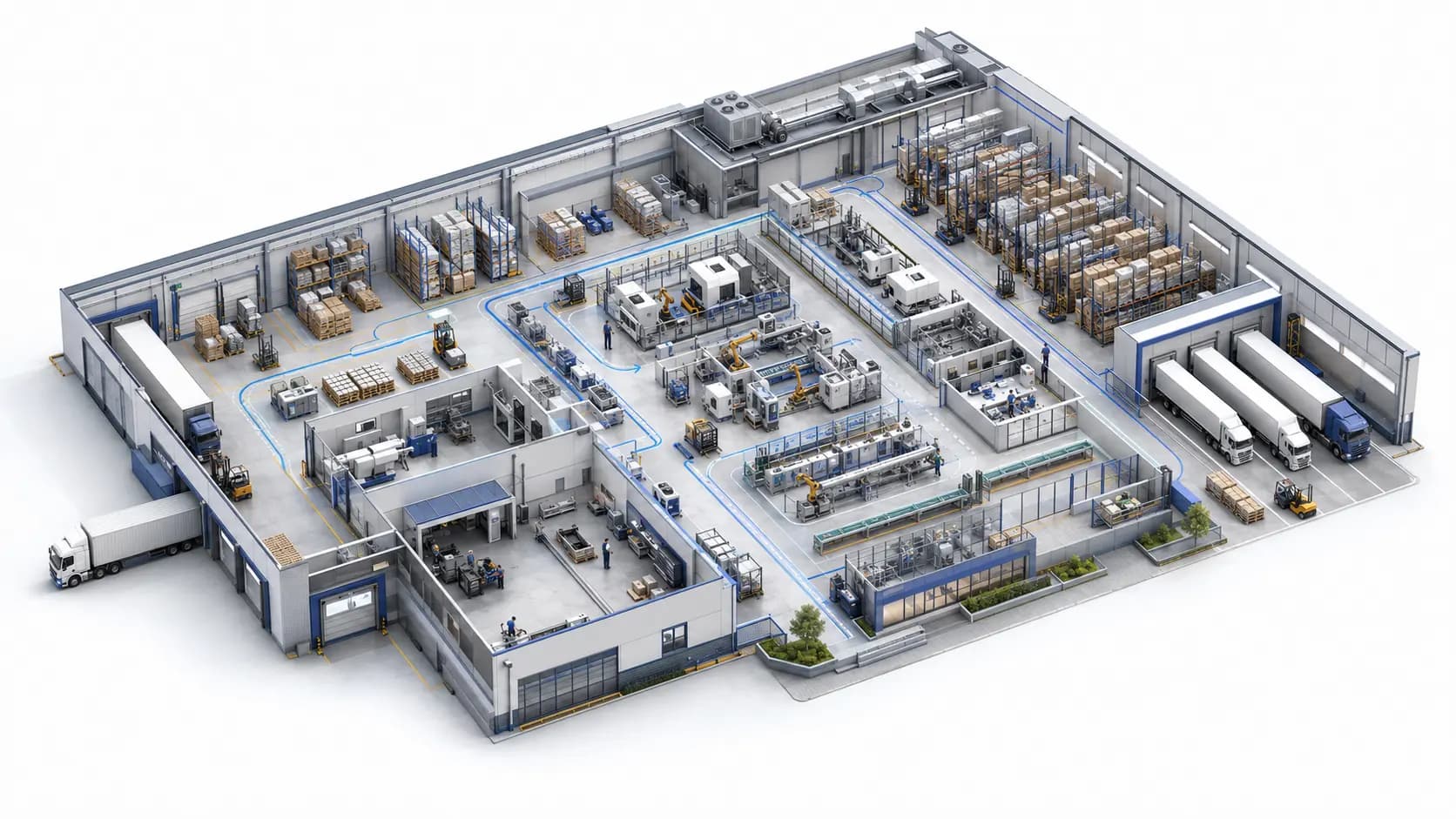
Factory digital twin
An interactive demonstration connecting events, capacity, quality, maintenance and decisions. Values are illustrative: your model uses your rules and data.
Simulate an event
Three exceptions are visible, but none currently threaten the customer date.
Handle alerts in the proposed order and retain the schedule.
Designed for different industrial contexts
Integration & ecosystem
Governance & data
Progressive deployment
Resources & training
Frequently asked questions
No. EMS Industry connects management, inventory, maintenance, transport and customer-relationship responsibilities. An existing or future MES remains a distinct system with its own responsibilities.
The core combines ESSOR Industry, PROTECH WMS Industry and OTILA CMMS Industry. CANDOR TMS Shipper, OTILA Asset Management and POCKET CRM extend the chain according to scope.
Yes. Mapping distinguishes systems to retain, extend, integrate or replace. A source of truth, events and recovery rules are defined for each object.
Yes, after modelling scope, objects, events, frequencies and decision rules. This page demonstrates the logic; the project model uses validated real data.
Yes. A pilot can cover one line, workshop, product family or complete flow, provided it preserves a coherent cycle between plan, materials, execution, control and outcome.
Exchanges can use OPC-UA, MQTT, APIs, files, databases or gateways depending on equipment and architecture. Useful data, frequency, cybersecurity and signal ownership are confirmed during scoping.
Genealogy depth, batch rules, checks, statuses, documents and retention periods are defined according to products, risks and applicable requirements.
No. Alerts depend on available history, sensors, thresholds and models. They support decisions; teams retain approval of maintenance work and priorities.
Each indicator has a definition, sources, period, exclusions and owner. Materials, time, energy, subcontracting and downtime are connected only after those rules are validated.
Deployment can be SaaS, on-premise or hybrid depending on solutions and context. It generally follows six stages: discovery, modelling, data and interfaces, pilot, phased rollout and continuous improvement.

Your next step
Choose a first flow, measure its starting point and move forward through evidence.