In the age of "Morocco AI 2030," the temptation to jump aboard the artificial-intelligence train is strong. But without a solid foundation, this investment could well become the greatest waste in your digital transformation.
The enthusiasm is palpable. The "Morocco AI 2030" plan and the "AI Made in Morocco" vision have created tremendous momentum, promising spectacular efficiency gains for national companies. In the logistics sector, the promises are enticing: ultra-precise demand forecasts, routes optimised in real time and predictive maintenance that eliminates breakdowns.
Yet in the field, an awkward silence often follows these impressive presentations. Executives wonder: where should we begin? The counter-intuitive answer is that your first strategic investment should not be an AI lab. It should be resolving the chaos in your own data.
The Myth of the "Magic Solution" and the Silo Trap
Magical thinking suggests that simply "implementing AI" will solve complex problems. In reality, artificial intelligence, and machine learning in particular, works on a simple principle: "garbage in, garbage out"—poor input data produces poor results.
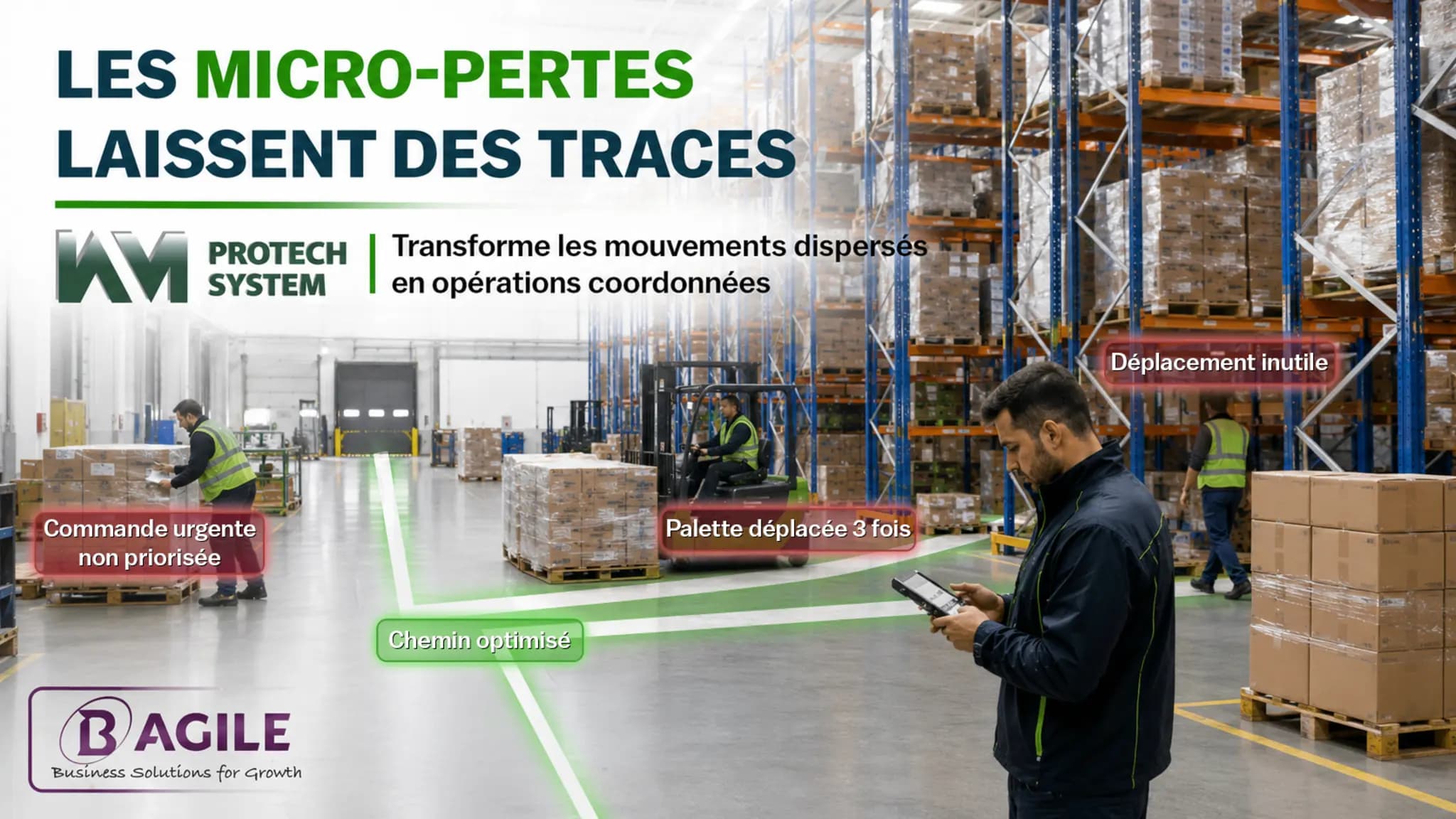
Imagine asking an assistant to reorganise your warehouse while giving them only a partial inventory written on sticky notes scattered across three departments. That is exactly the challenge algorithms face in many companies.
The problem is not a lack of data, but its dispersion:
- Customer orders are in the CRM.
- Stock levels are in the WMS (or worse, in a paper register).
- Transport costs and actual lead times are in the TMS, or in the dispatcher's memory.
- Production or quality data is in another system.
This fragmentation creates a schizophrenic supply chain in which each department operates with a different version of the truth. Launching an AI project on this ground is like building a castle on shifting sand.
The foundation before the algorithm
Observed journeys start by consolidating and improving data flows. Consider the illustrative example of a Moroccan citrus exporter: before forecasting transit times to Europe, it must first:
- Capture the "harvest completed" data from the field in real time.
- Immediately transmit this information to the packing warehouse so that the line can be prepared.
- Synchronise this data with the schedule for refrigerated trucks and port loading slots.
- Consolidate everything with customs data (BADR) and weather forecasts.
Only with this unified, reliable flow can an algorithm then learn, identify recurring bottlenecks and suggest optimisations. Without this foundation, AI will be nothing more than an expensive gadget.
The Unified Platform: The True "Digital Brain" of Your Supply Chain
Enterprise software can act as an operational reference when correctly scoped; it does not automatically become a unique or universal platform.
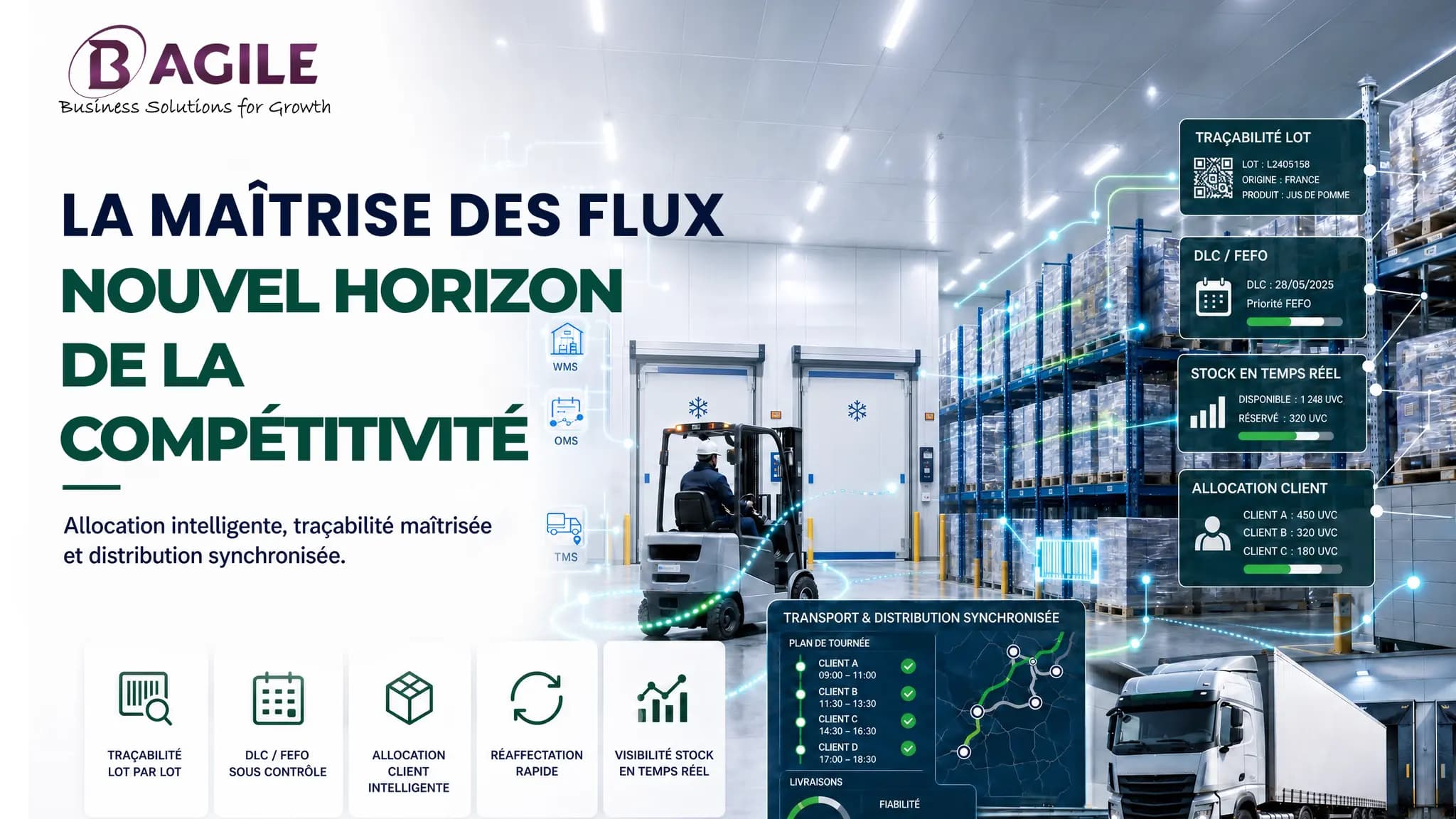
This platform (whether a business-specific ERP for international freight or an integrated TMS) fulfils three critical functions for the AI era:
- The data integrator: it connects sources covered by validated interfaces and exchange contracts.
- The shared reference: it reconciles available versions, flags gaps and preserves their origin.
- Data preparation: it structures the data needed for the selected analytics or AI uses.
In short, it turns information noise into a clear, actionable signal.
The Call to Action: Building Morocco's 2030 Supply Chain Today
The race towards AI in logistics is a marathon, not a sprint. For Moroccan companies, the most strategic—and most urgent—step is not to recruit data scientists. It is to audit and consolidate their digital foundations.
Before launching an artificial-intelligence project, ask yourself these fundamental questions:
- Is my operational data centralised or scattered?
- Can I obtain a single, real-time view of an order's status, from the field to the final customer?
- Is my current system a data integrator or a silo creator?
B‑AGILE designs solutions that can contribute to a more reliable and connected data foundation. Their exact role, interfaces and ability to support an AI use case must be qualified project by project.
The question is no longer whether you will integrate AI, but how you will prepare for it. And preparation begins with a single system of truth.