
Demand peaks
Priorities shift faster than teams can rebalance workload.


PROTECH WMS · Distribution & e-commerce
Unify allocation, fulfilment, packing, shipping and returns without erasing channel-specific rules.
Friction that consumes time
Priorities shift faster than teams can rebalance workload.
Availability, lead times and rules differ across e-commerce, marketplaces, stores and B2B.
Packaging, cutoffs and documents vary by promise and marketplace.
Reason, condition and reintegration decisions are separated from the original order.
The operational thread
Concrete benefits
Every channel keeps its service rules while warehouse execution stays coherent, controlled and traceable.


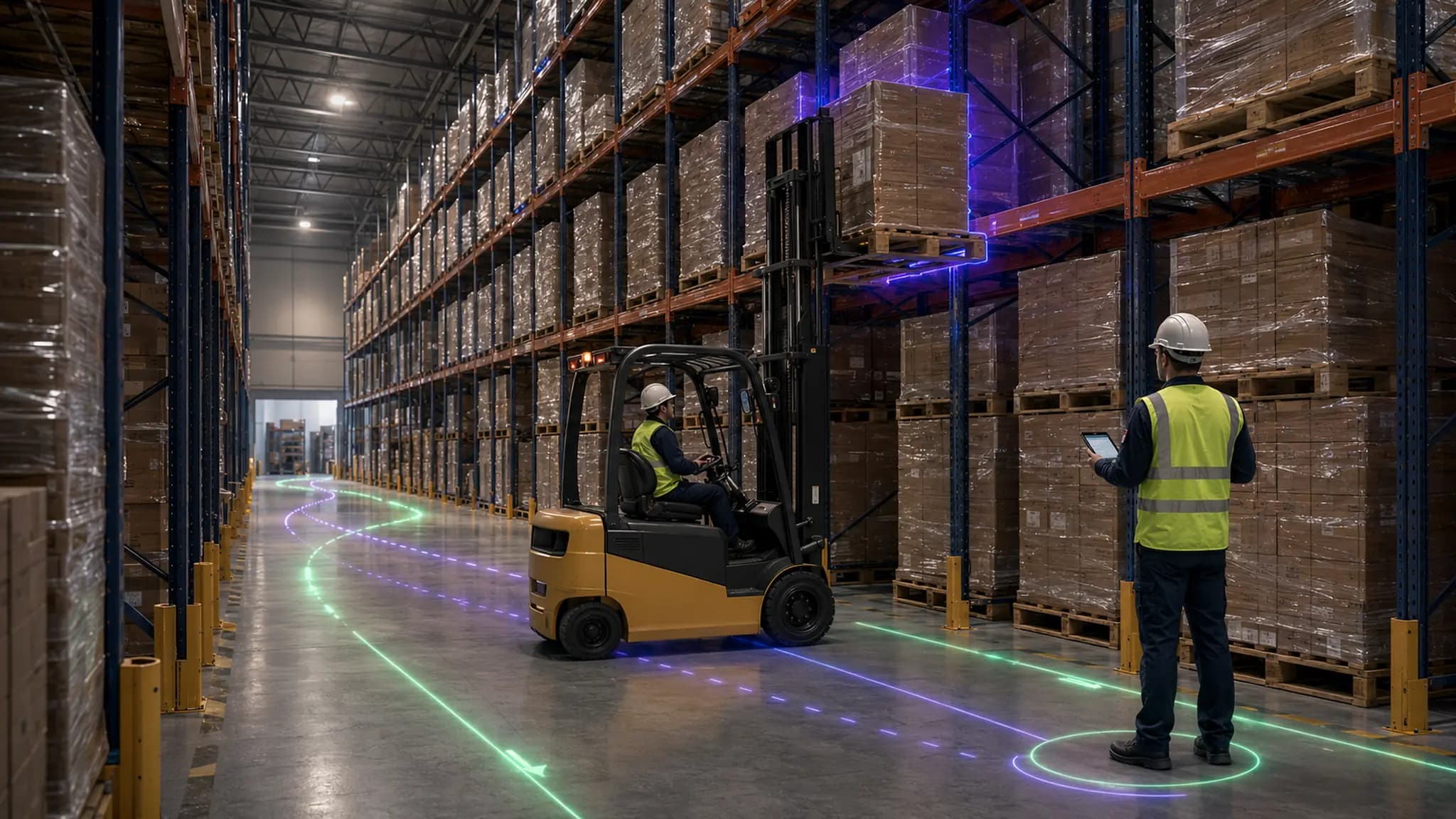

Make backlog, workload, lead times, quality and return reasons visible for operational decisions.
Explore the caseOperations lab
 Priority, workload and sequencing decision visible
Situation
Backlog rises quickly before the carrier cutoff.
Functional scope

Selected capability
Channel, customer, priority, cutoff and service promise.
Information-system ownership
PROTECH WMS Distribution & e-commerce receives qualified orders, applies allocation rules, organises workload and guides field execution through shipment or return.
Owns channel, customer, order, promise and commercial rules.
Reserves authorised inventory, organises workload and guides picking, packing, shipping and returns.
Owns transport planning, carrier handover, milestones and proof according to the selected scope.
PROTECH WMS family
Every card opens a dedicated page; no prohibited or unconfirmed scope is presented as an edition.

Multi-client execution, logistics contracts and pre-billing.
Explore
Internal flows, line-side supply, material traceability and ERP/MES continuity.
Explore
Omnichannel fulfilment, allocation, packing, shipping and returns.
Current page
Physical bonded-warehouse execution, locations and authorised movements.
ExploreIntegrations & ecosystem
Standard connectors, APIs, EDI or files are qualified by system, version, flow, frequency, security and recovery.
Controlled deployment
Flows, sites, roles and objectives
Master data, inventory and rules
Journeys, controls and rights
Interfaces, equipment and recovery
Acceptance on a real flow
Adoption, measurement and improvement
Insights & resources
Frequently asked questions
Yes, when their priorities, cutoffs, inventory promises, packaging and control rules are explicit.
A return follows the approved inspection, status and authorisation process; automatic reintegration is never assumed.
Yes, if the pilot validates order, allocation, fulfilment, shipment and return statuses end to end.
These journeys can coexist once units, zones, equipment, controls and order rules are qualified.
Yes. The catalogue identifies supported platforms, versions and flows; any additional work is scoped separately.
Yes. Master data, owners, rules, packaging, carriers and rights can be separated then consolidated for the selected organisation.
Both modes are available. The choice depends on architecture, equipment and operational constraints.
Your next step
Map the flows, data, responsibilities and first scope to take live.